|
|
| . |
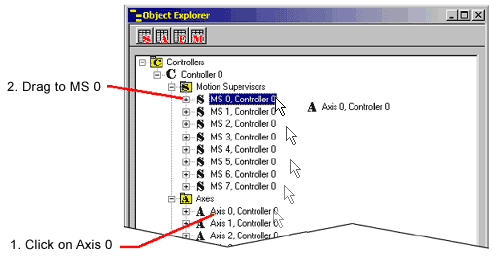
Mapping One Object to AnotherTo map Axis 1 to MS 0, use the cursor to select the Axis 1 object, then drag it into MS 0.
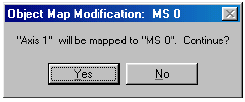
A dialog box will be displayed to confirm the object mapping:
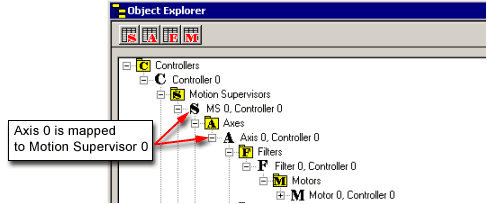
To confirm the object mapping, click on the Yes button. The Object Explorer will now show Axis 1 mapped to Motion Supervisor 0:
To map several objects to their "default" sub-object,
i.e., the one with the same number, use the "Sub-Object Map" button on
the Summary window. (For Motion Supervisors, this button is labeled "Axis
Map.") If the entire row is selected and the button is clicked, then an
Object List Configuration Dialog Box will be opened to map sub-objects
to each object. If the
Mapping Filters, and MotorsBy default, each Axis is mapped to one Filter and each Filter is mapped to one Motor. For standard motion systems, you will not need to deal with Axis/Filter/Motor mapping. For gantries, you will need to configure the Axis/Filter/Motor mapping. Gantry configuration is beyond the scope of Motion Console. For more information, see Gantry Configurations. TroubleshootingAre you experiencing unexpected behavior? It may be a result of improper axis mapping. See the Troubleshooting section.
|
|||||||||||
| | | Copyright © 2001-2009 Motion Engineering |